
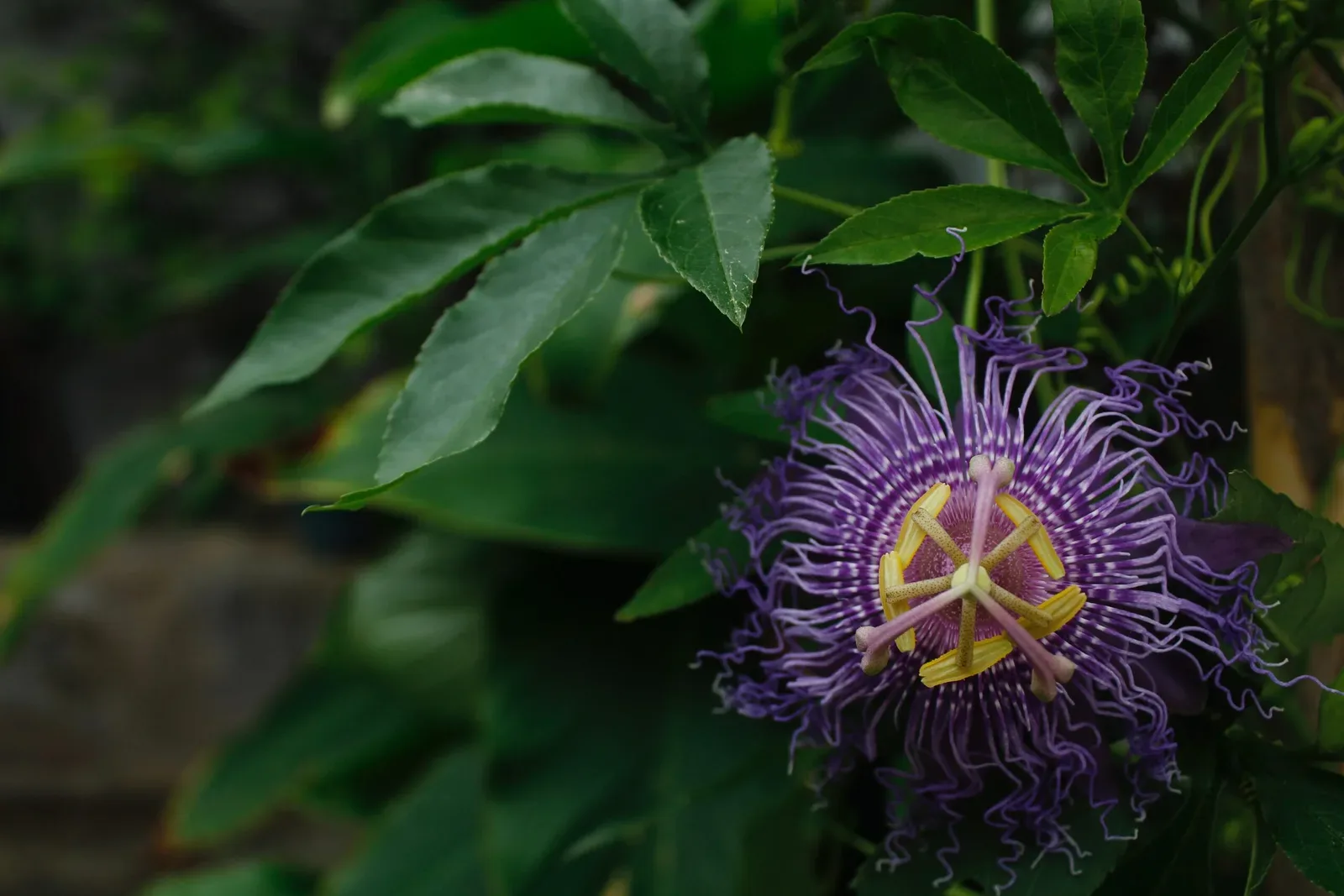
Calming Passionflower
By Dr. Rev. Isabel Sharkar, NMD
The Calming Power of Passionflower
For centuries, the unusual looking violet and white passionflower (Passiflora incarnata) has been used as a calming botanical treatment. Its use dates back to the Aztecs in Central America who used parts of the vine to treat insomnia. Native Americans used it to soothe inflammation in wounds. Spanish conquistadors brought passionflower to Europe and from there it made its way to North America. As the herb traveled the world, new uses were discovered. It has been used as a calming tonic for babies during weaning, to tame anxiety, and to support a general state of relaxation. Today, passionflower has therapeutic uses as a gentle sedative to reduce anxiousness and as a sleep aid.The exact pathways through which Passiflora brings about calming effects are still being studied. We know that some compounds in passionflower bind to the same areas of brain cells affected by a neurotransmitter known as GABA. Like GABA, Passiflora soothes the nervous system by reducing activity in certain brain cells, resulting in a relaxation response.There are many ways to use Passiflora: loose leaf and bagged tea, capsule or tablet, and tincture. Drowsiness and dizziness can occur when taking passionflower. When taken with other medications, it can increase the effects of those medications. Passionflower also contains compounds that can stimulate the uterus, so it is not suitable for pregnant women. Before using passionflower in any form, consult with a holistic physician or experienced herbalist.
- REFERENCES
- Johnson, R.L., S. Foster, Low Dog, T. and Kiefer, D. National Geographic Guide to Medicinal Herbs: The World's Most Effective Healing Plants. (2012) Washington, D.C.: National Geographic.
- HealthLine.com "Calming Effects of Passionflower." Accessed 9 Oct 2020.
- Mars, B. & Fiedler, C. (2015). The Home Reference to Holistic Health & Healing. Beverly, MA: Fair Winds Press.
- Bennett, Robin Rose. (2014). The Gift of Healing Herbs. Berkeley, CA: North Atlantic Books.
- Hoffman, D. (2003). Medical Herbalism. Rochester, VT: Healing Arts Press.
Medical Disclaimer
This content is provided by Indigo Integrative Health Clinic for educational purposes only. It does not constitute medical advice, a diagnosis, or a treatment recommendation, and does not establish a provider-patient relationship. Individual health conditions vary — information presented here may not apply to your specific situation. Always consult a qualified, licensed healthcare provider before making decisions about your health, medications, supplements, or treatment plan.






Continue reading
Stinging Nettle & Allergies
Botanical Rx
Palo Santo
Description to be added soon
Botanical Rx
The Power of Cat's Claw
Botanical Rx