
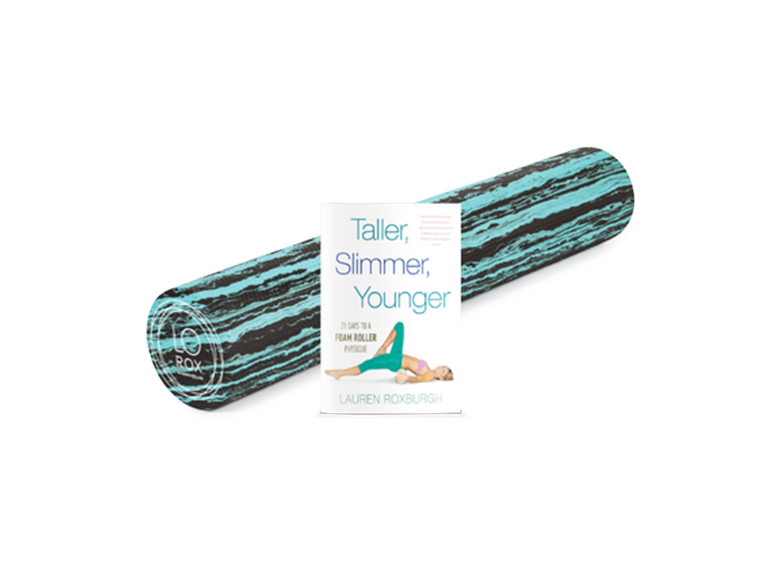
Taller, Slimmer, Younger
By Caroline Hoeffgen, COO, BCHC, JD | Reviewed by Dr. Rev. Isabel Sharkar, NMD | Published Aug 2023
I was introduced to Taller, Slimmer, Younger and quite skeptical to leave behind my heavy cardio routine. I've been delving deep into my genetics this year, understanding how my body is naturally built and how I can help to best optimize it so that I am working with my body and not against it.I now understand that my genes and body won't benefit from heavy cardio and do better with strength training. Through a lot of trial and error over the years, I know this to be true for me because I see how quickly my body transforms with regular strength training. To have the evidence of my genes supporting what I already know is quite remarkable. The science is finally here and you can take the guess work out!However, this ritual isn't about your genes. I'll save your genes for another time! This ritual is about rolling it out. Rolling out toxins and unwanted fat, for a stronger, leaner, taller you. Lauren Roxburgh is author of the best-selling book ‘Taller, Slimmer, Younger – 21 Days to a Foam Roller Physique.' Certified in the fields of Structural Integration, classical Pilates, nutrition and pre/post-natal yoga, Lauren is a body alignment, fascia and movement healer. Lauren teaches that manipulating the fascia that covers the entire muscular structure, you can eliminate congestion and puffiness, bringing the body into alignment and smoothing out lines.
"Obtaining true well being and a stunning physique involve working with the body as a whole, 3-dimensionally, from top to bottom and from the inside out."
When you get her book and foam roller you can try out her 21 day challenge. If cardio doesn't excite you, this could be the right fit for you. She walks you through a series of exercises to do each morning focusing on one major body group at a time. Starting from the bottom- your feet, through pilates and structural integration- she helps to ground you and lay down a solid foundation.I've done a 10-Series of Rolfing earlier this year in London and this is very similar to it. The plus side is that you can do this in the luxury of your own home for a fraction of the price and still reap the benefits of structural integration. With 20-30 minutes each day, you can reduce cellulite, hydrate and “ring out” your connective tissue and organs, tighten your skin, and sculpt your muscles to be more long and lean.Remember - posture and health go hand in hand! Foam rolling is a wonderful tool to add to your daily rituals. Check out her shop for Taller, Slimmer, Younger and the foam roller.
Medical Disclaimer
This content is provided by Indigo Integrative Health Clinic for educational purposes only. It does not constitute medical advice, a diagnosis, or a treatment recommendation, and does not establish a provider-patient relationship. Individual health conditions vary — information presented here may not apply to your specific situation. Always consult a qualified, licensed healthcare provider before making decisions about your health, medications, supplements, or treatment plan.






Continue reading

Stress & Your Body
Lifestyle

Planning for Your Best Health in 2021
Lifestyle

Become An Informed Consumer
Lifestyle