Saint John's Wort & Depression
By Caroline Hoeffgen, COO, BCHC, JD | Reviewed by Dr. Rev. Isabel Sharkar, NMD | Published Nov 2019
Saint John's Wort (Hypericum perforatum)
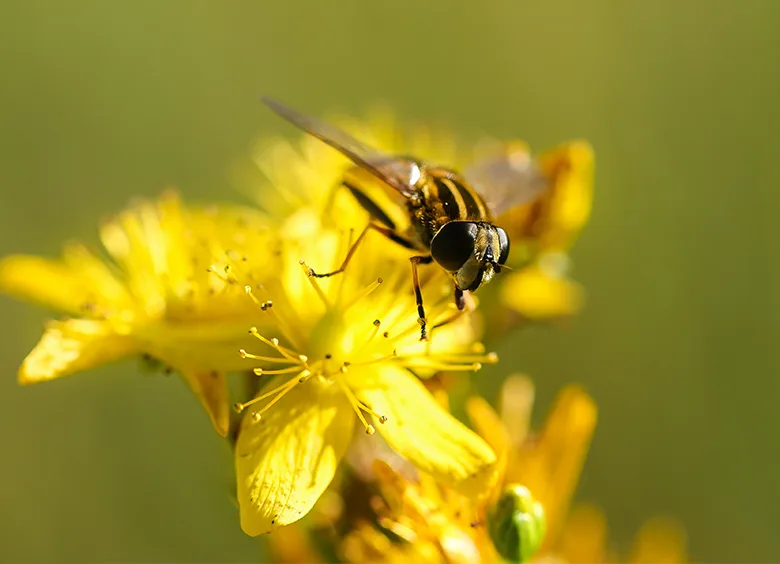
SJW has been used for centuries by European herbalists and, today, is prescribed by doctors in Europe and the U.S. to treat depression. Standardized extracts of St. John's Wort (SJW) have been tested in treatment of thousands of patients, making it among one of the most thoroughly researched botanical medicines for moderate to intense depression.St. John's Wort can improve many psychological symptoms associated with depression, including sleep disturbance, anxiousness, insomnia, apathy, and feelings of worthlessness. Researchers believe the active ingredients hypericin and hyperforin may be responsible for these benefits. These compounds appear to increase the levels of neurotransmitters in the brain (serotonin, dopamine, and noradrenaline), which help improve and regulate mood.In some studies SJW has been shown to be as effective, or more effective, than prescription antidepressants for patients with mild forms of depression. However, it may not be strong enough for people experiencing chronic or severe depression.Saint John's Wort is a flowering plant recognizable by its bright but dainty yellow petals. The plant name comes from the fact that it blossoms in June, the birth-month of St. John the Baptist. The flowering tops of SJW are used to prepare teas, tablets, capsules, and liquid extracts.Many medications and herbs can interact with SJW so if you are taking this supplement be sure mention it to your doctor. Also, you can become more sensitive to the sun while taking SJW and you should use extra sun protection including wearing a hat. Consult with your holistic physician before using St. John's Wort to establish if this is something for you and the appropriate dosage for your emotional health needs.
RESOURCES
- Murray, M.T. and Pizzorno, J. "Depression." Cited in Encyclopedia of Natural Medicine (3rd Ed.) 2012. New York, NY: Atria Paperback: Simon & Schuster, Inc. p. 497-498.
- Klaus, L., Michael, B., Egger, M., Mulrow, C. "St. John's Wort for Depression." British Jl Psychiatry (Feb 2005), 186(2) 99-107; Doi: 10.1192/Bjp.186.2.99. Accessed 18 Dec 2017.
- MayoClinic.org "St. John's Wort." Accessed 15 Dec 2017.
- Philipp, Michael, Ralf Kohnen, and Karl-O Hiller. "Hypericum Extract versus Imipramine or Placebo in Patients with Moderate Depression: Randomised Multicentre Study of Treatment for Eight Weeks." BMJ : British Medical Journal319.7224 (1999): 1534–1539. Accessed 18 Dec 2017.
- Shelton RC, Keller MB, Gelenberg A, et al. "Effectiveness of St. John's wort in major depression: A randomized, placebo-controlled trial." JAMA (2001) 285:1978-86 Accessed 15 Dec 2017.
Medical Disclaimer
This content is provided by Indigo Integrative Health Clinic for educational purposes only. It does not constitute medical advice, a diagnosis, or a treatment recommendation, and does not establish a provider-patient relationship. Individual health conditions vary — information presented here may not apply to your specific situation. Always consult a qualified, licensed healthcare provider before making decisions about your health, medications, supplements, or treatment plan.






Continue reading
Stinging Nettle & Allergies
Botanical Rx
Palo Santo
Description to be added soon
Botanical Rx
The Power of Cat's Claw
Botanical Rx