
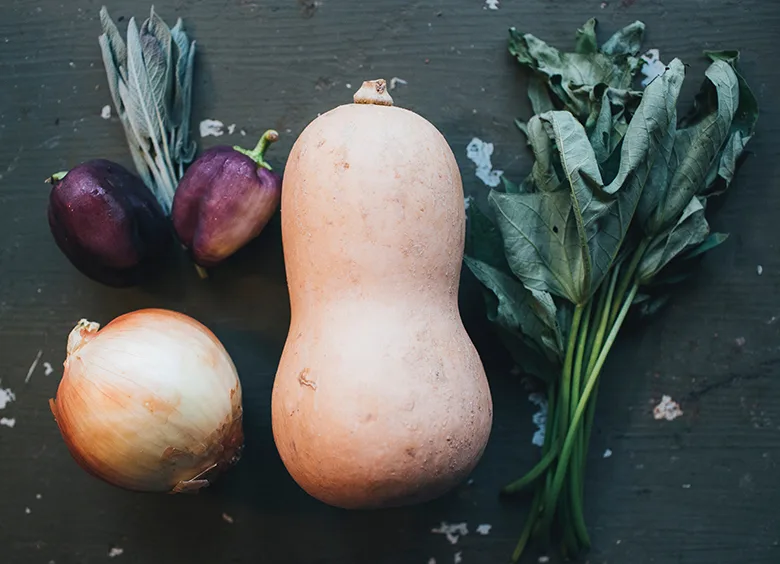
Mediterranean Spaghetti Squash
By Dr. Rev. Isabel Sharkar, NMD | Published Aug 2023
Spaghetti squash, also known as vegetable spaghetti, is a type of winter squash that, when cooked, separates into long pasta-like strands. All winter squash share a few common characteristics. The outer rinds are hard and difficult to pierce, enabling them to have long storage periods, from one week and six months. The flesh is mildly sweet to nutty in flavor and finely grained in texture.In general, this squash provides abundant phytonutrients that promote health. It contains beta-carotene, Vitamin A, and Vitamin C, which provide anti-inflammatory benefits and support the immune system. Other key nutrients include vitamin B6, dietary fiber, folate, magnesium, copper, and potassium. The combination of these nutrients make this food an excellent part of a heart-healthy diet. These nutrients are also known for their role in cancer prevention and management of blood sugar levels.Spaghetti squash is at peak season from October to November. Choose a squash that is firm, heavy for its size and has a dull, not glossy, rind. Soft rinds may indicate that the squash is watery and lacking in flavor.Spaghetti squash is a great choice for incorporating a tasty, meatless meal into your weekly menu. Although it has a mild nutty flavor on its own, when you combine spaghetti squash with sautéed onions, olives, feta, and juicy tomatoes, it absorbs those flavors, resulting in a Mediterranean dish everyone will enjoy. This recipe makes a hearty, lunch or dinner. If going meatless isn't your preference, pair this dish with fish or chicken. Serves 4.INGREDIENTS
- 1 3-4 lb spaghetti squash, halved lengthwise and seeded
- 2 tbspn sunflower oil
- 1 medium onion, chopped
- 1 clove garlic, minced
- 2 1/2 c. halved grape tomatoes
- 3/4 c. crumbled organic feta cheese
- 1/2 c. sliced organic black olives
- 3 tbspn chopped fresh basil
- Salt and pepper
Preheat oven to 350 degrees. Lightly grease a baking sheett and place spaghetti squash on the baking sheet, cut sides down. Bake until you can poke a sharp knife into the squash with little resistance, about 35-45 minutes. Remove squash from oven; set aside to cool.Heat oil in a skillet over medium heat. Sauté onion in oil until tender. Add garlic and sauté for 30 seconds. Stir in the tomatoes and cook briefly, about 1 minute. You only want to warm the tomatoes.Use a large fork to shred the "spaghetti" from the squash and place the strands in a large bowl. Toss with the sautéed vegetables, feta cheese, olives, and basil. Add salt and pepper to taste. Serve warm.Recipe Source: Garnish with Lemon.
Medical Disclaimer
This content is provided by Indigo Integrative Health Clinic for educational purposes only. It does not constitute medical advice, a diagnosis, or a treatment recommendation, and does not establish a provider-patient relationship. Individual health conditions vary — information presented here may not apply to your specific situation. Always consult a qualified, licensed healthcare provider before making decisions about your health, medications, supplements, or treatment plan.






Continue reading

Earth-Friendly Diet Resolutions
Description to be added soon
Clinical Nutrition
Walnuts - The Ultimate Brain Food?
Clinical Nutrition

Are Supplements Good For Me?
Clinical Nutrition