
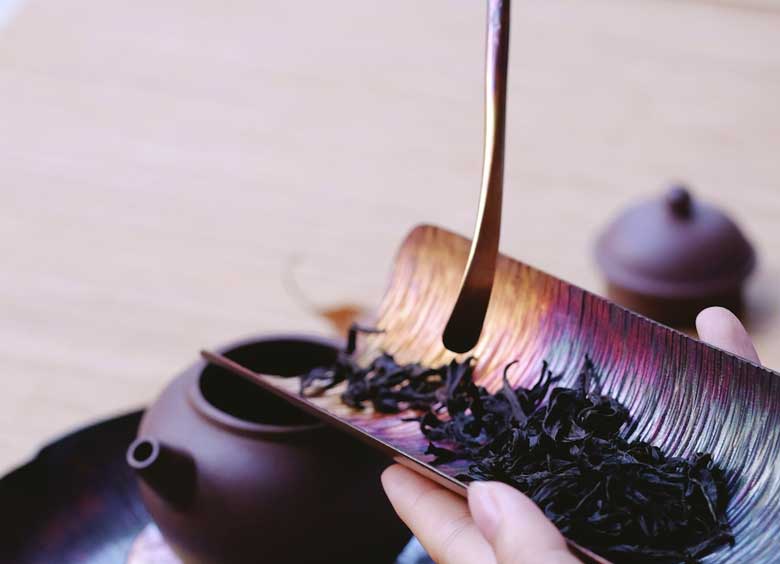
Tea Ceremonies, A Time For Stillness
By Caroline Hoeffgen, COO, BCHC, JD | Reviewed by Dr. Rev. Isabel Sharkar, NMD | Published Nov 2019
It’s no secret that I love tea and recently my tea craze has reached a new height. Who ever thought that you can dry some medicinal herbs, mix them with water and voila, an elixir in your cup is created. An elixir that can heal you on a physical, mental and spiritual level. The medicinal properties of tea date back to China in 2737 BC. Legend has it that the Chinese emperor Shen Nung, a renowned herbalist, was sitting beneath a Camellia sinensis tree and as his servant boiled drinking water, some leaves from the tree blew into the water. Shen Nung decided to try the infusion and the resulting drink was what we now call tea.True or not, containers for tea have been found in tombs dating from the Han dynasty (206 BC – 220 AD) but it was under the Tang dynasty (618-906 AD), that tea became firmly established as the national drink of China. Tea was then introduced to Japan, by Japanese Buddhist monks who had traveled to China to study. It wasn’t until the 1600’s that tea was introduced to Europe.Throughout this past year I’ve become aware that there is more to tea than us Westerners understand of it. Tea ceremonies are much more than chucking a tea bag in boiling hot water. The tea ceremony, literally translated as “way of tea” in Japanese, and “art of tea” in Chinese, is a cultural activity involving the ceremonial preparation and presentation of tea. I have witnessed both the Chinese Gung Fu tea ceremony with pickled cherry blossoms as well as the Japanese Matcha tea ceremony. Both allow for a sense of stillness, a moment to slow down and be in gratitude. I’ve been obsessed with Matcha and love to start my mornings right now with a Matcha tea ceremony.A tea ceremony contains an inner and outer part. The inner aspect of a tea ceremony emphasizes simplicity and naturalness. Whereas, the outer portion of tea ceremony emphasizes the Japanese concept of “sabi,” or the material life. A reminder that our exterior, physical life is but a temporary thing that will decay and eventually depart. By understanding the inevitability of impermanence (sabi) and the simplicity of our inner being (wabi), one can grow toward a state of consciousness even in this life.Modern expert on tea ceremony say that both sides of the brain are stimulated by Japanese tea ceremony and that it works to bring a deep inner peace and tranquility to those involved by bringing mind and body together.Instead of coffee, I give myself enough time to enjoy the ritual of matcha green tea while I do my daily prayers and affirmations. A pause before starting my day to be grateful works wonders for how my day unfolds.
REFERENCES
- UK Tea and Infusions Association. Accessed April 10, 2018.
- Matchatea.com. The Secret Meaning of Traditional Japanese Tea Ceremony. Accessed April 10, 2018.
Medical Disclaimer
This content is provided by Indigo Integrative Health Clinic for educational purposes only. It does not constitute medical advice, a diagnosis, or a treatment recommendation, and does not establish a provider-patient relationship. Individual health conditions vary — information presented here may not apply to your specific situation. Always consult a qualified, licensed healthcare provider before making decisions about your health, medications, supplements, or treatment plan.






Continue reading

Taller, Slimmer, Younger
Lifestyle

Stress & Your Body
Lifestyle

Planning for Your Best Health in 2021
Lifestyle