
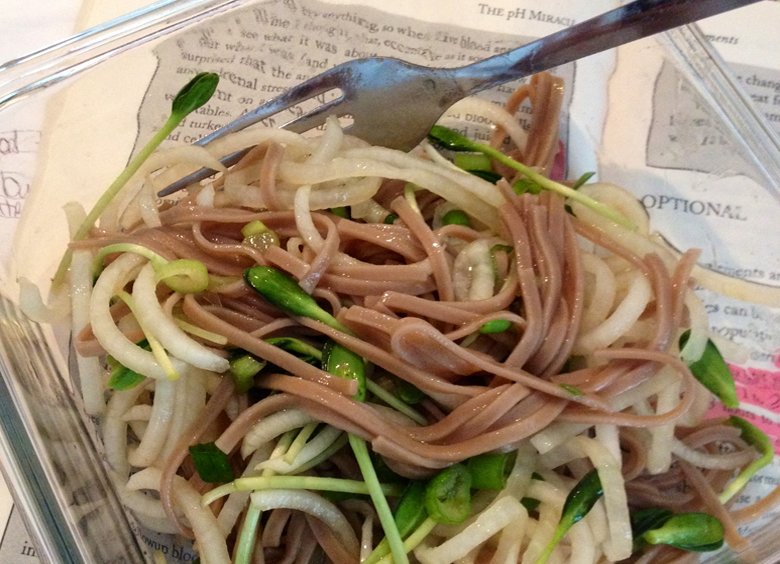
Daikon Sunflower Soba
By Dr. Rev. Isabel Sharkar, NMD | Published Nov 2019
Ever since I bought my Spirooli, I've been spirooling away! From zucchini spaghetti to Daikon radish, I just can't get enough. Using the Spirooli adds flare to all raw dishes. I enjoy every last bite and walk away feeling light and healthy.
Ingredients
- 1 roll soba noodles
- 1 pack sunflower sprouts (from Mom's Organic), cut with ceramic knife and rinsed
- 2 tbsp Organic Tamari Gluten-Free Soy Sauce (add more if needed)
- Himalayan sea salt, use sparingly, Tamari is naturally salty
- 2 tbsp hemp seeds
- 2 tbsp white sesame seeds
- 2 large Daikon radish, peeled and spiroolied
Boil hot water and add soba noodles. Do not over cook noodles, they should be a bit al dente. Rinse with cold water and add to large mixing bowl. Add in all ingredients and mix well. This dish tastes delicious cold.
Medical Disclaimer
This content is provided by Indigo Integrative Health Clinic for educational purposes only. It does not constitute medical advice, a diagnosis, or a treatment recommendation, and does not establish a provider-patient relationship. Individual health conditions vary — information presented here may not apply to your specific situation. Always consult a qualified, licensed healthcare provider before making decisions about your health, medications, supplements, or treatment plan.






Continue reading

Earth-Friendly Diet Resolutions
Description to be added soon
Clinical Nutrition
Walnuts - The Ultimate Brain Food?
Clinical Nutrition
Mediterranean Spaghetti Squash
Clinical Nutrition